DATA STORIES
03
Building a Flourishing Society
by Closing the Health Gap
A flourishing society depends on more than economic growth. It depends on whether people can access the essentials that enable them to thrive — good health, stable livelihoods, and opportunities for a better future.
Yet health outcomes remain uneven across Malaysia. Lower-income communities experience higher rates of chronic conditions such as diabetes and hypertension, while healthcare costs and limited access to care can place additional strain on vulnerable households. These challenges are closely linked: poverty can lead to poor health, while poor health can reduce income, increase care costs, and limit opportunities to participate fully in society.
Poor health is not just a healthcare challenge – it limits participation in economic and social life.
4.64m
years
of life lost (Malaysia, 2019)
Years lived in
poor health (Malaysia):
9.1 years (1990)
9.5 years (2019)
Malaysia ranks
9th out of 22
countries
Malaysia's Healthy Life Expectancy vs Vietnam and Brunei: Among the Western Pacific WHO region, Malaysia ranked 9th out of 22 countries, behind Vietnam (65.3) and Brunei (66.9)
Source: Khazanah Research Institute, World Health Organisation (WHO)
Health as a Foundation
for Opportunity
Good health is not only a social outcome — it is an economic one. The World Bank estimates that around 2 billion people globally face financial hardship when accessing healthcare, while underinvestment in health systems can reduce productivity, slow economic growth, and widen inequality.
For many families, healthcare expenses can be the difference between financial stability and hardship.
The economic burden of chronic disease extends far beyond healthcare costs.
Poor health affects productivity, household income, and national economic performance.
Malaysia spends about
RM3.3b per year
on CKD (Chronic Kidney Disease) and ESKD (End-Stage Kidney Disease) care, with expenditure estimated to exceed RM4b by 2040
RM39,791
The estimated cost of dialysis per patient per year
Cost associated with Diabetes
Absenteeism
RM0.7b
annually
Presenteeism
RM22.5b
annually
Diabetes and kidney disease among leading contributors to disability and premature death
Source: Code Blue, World Health Organisation (WHO)

Bringing Healthcare
Closer to Communities

Established by both Waqaf An-Nur and KPJ Healthcare Berhad, the Klinik Waqaf An-Nur (KWAN) facility network leverages KPJ's position as Malaysia's widest domestic healthcare network and Waqaf An-Nur's community outreach to bring healthcare closer to the communities who need it most.
The KPJ Network
30
specialist hospitals nationwide
850,000
Patients served (both in-patient and out-patient as of FY2025)
Revenue
RM4.26b
FY2025
Exponential Community Impact:
Waqaf An-Nur and KPJ
25
clinic network locations nationwide
9
dialysis centres
69
dialysis machines
213
dialysis patients served daily
RM10
outpatient consultation
2.1m
patients served to date
Creating Pathways
Out of Poverty
Health alone is not enough to break cycles of vulnerability. Economic opportunity is equally important.
Micro, small and medium enterprises account for 96.1% of businesses in Malaysia and contribute nearly 60% of GDP. Yet many entrepreneurs remain excluded from formal financing, with MSMEs facing an estimated RM90b financing gap.
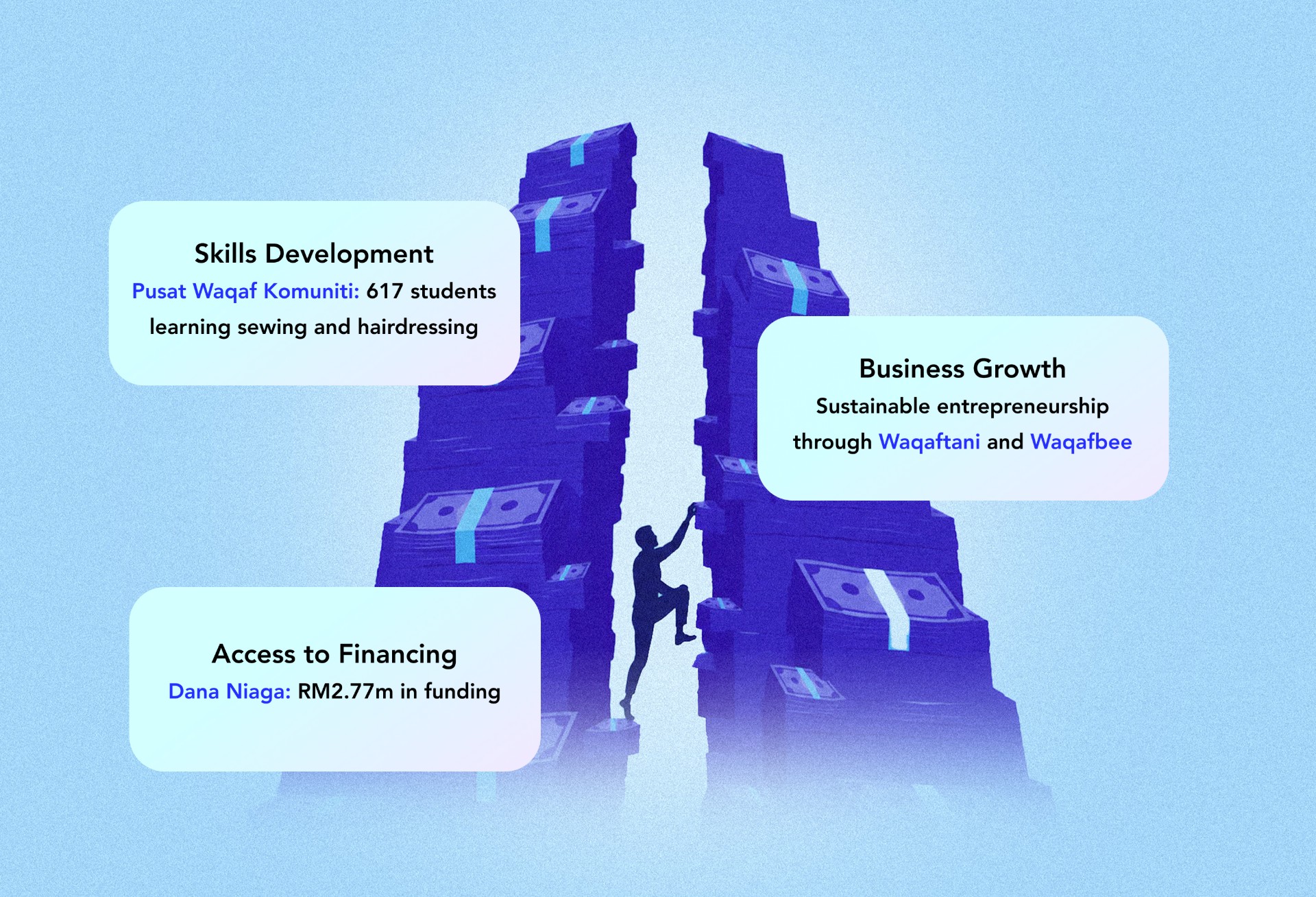
Through initiatives such as Dana Niaga and Waqafpreneur, Waqaf An-Nur supports aspiring entrepreneurs with financing, skills development, and business guidance to help strengthen household incomes and long-term resilience.
By supporting both healthcare access and economic participation, these programmes help address the interconnected factors that contribute to poverty and inequality.
Source: Securities Commission Malaysia
Corporate as a Force for Good

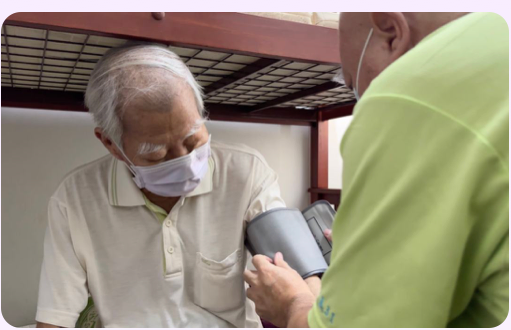
10m+
beneficiaries reached
in 25 years
Addressing health inequities requires collaboration across sectors. Increasingly, corporations have a role to play not only in creating economic value, but also in helping communities access the resources needed to thrive.
By addressing the interconnected challenges of health, inequality, and opportunity, JCorp and Waqaf An-Nur demonstrate how corporations can act as a force for good — helping create the conditions for more people to